29 Jun 2026
Assessment Protocols Reveal User Preferences in Hybrid App-Based Gaming Formats
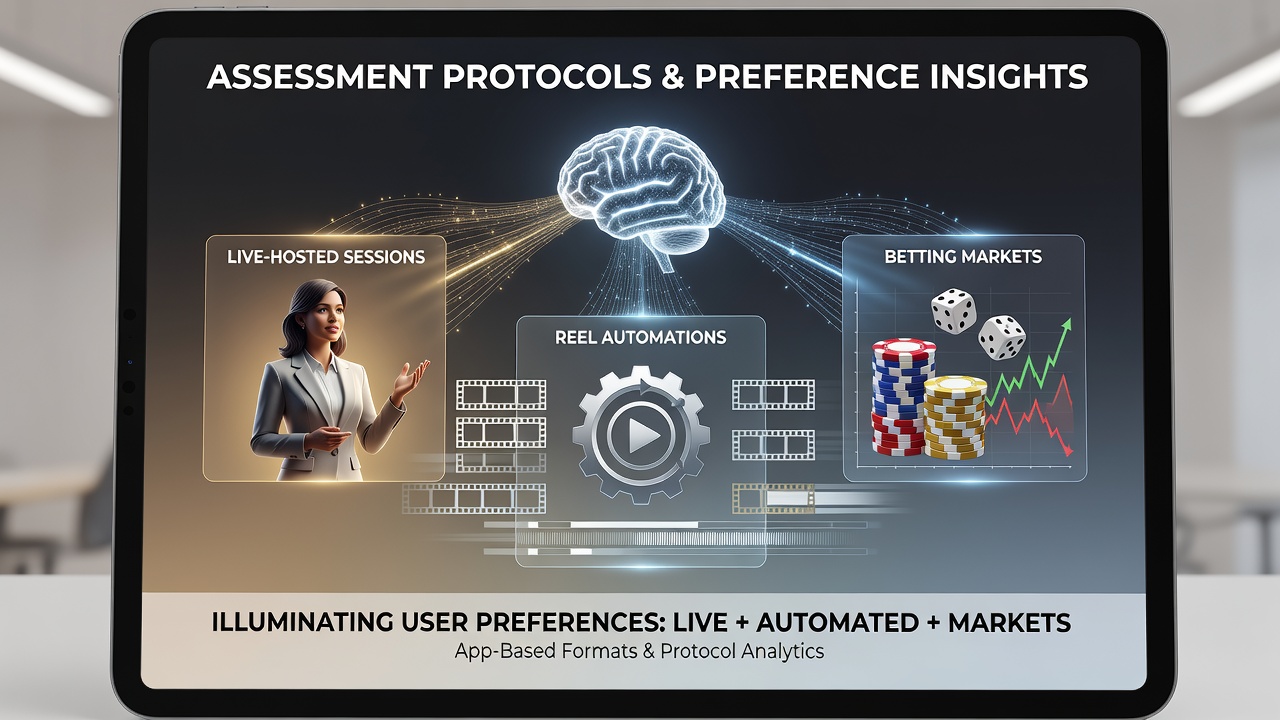
Assessment protocols in digital gaming environments track how users engage with combinations of live-hosted sessions, reel automations, and betting markets within single app platforms, and data collected through these methods shows clear patterns in June 2026. Researchers at multiple institutions apply standardized evaluation frameworks that measure session duration, feature switching frequency, and deposit activity tied to each element. These protocols rely on anonymized user logs, A/B testing sequences, and post-session surveys that capture preferences without identifying individuals.
Core Components of Modern Assessment Protocols
Protocols begin with baseline data collection that records initial app interactions, then layer in behavioral analytics to follow transitions between live dealer tables, automated slot reels, and real-time betting interfaces. Studies conducted by academic teams at universities in North America and Europe demonstrate that users often start with one format yet shift to others within the same session when the app presents seamless navigation options. Metrics include time spent in live video streams versus reel spin cycles, along with wager sizes placed across sports markets during those same periods.
Regulatory bodies such as the Pennsylvania Gaming Control Board publish aggregated reports that align with these findings, noting increased cross-feature activity in mobile environments throughout early 2026. Protocols also incorporate heat-mapping tools that visualize where users linger on screens, revealing that integrated dashboards combining all three elements reduce drop-off rates compared with siloed designs.
Live-Hosted Sessions and Their Role in Hybrid Preferences
Live-hosted sessions maintain strong engagement when paired with quick-access reel automations, according to protocol outputs from multiple app operators. Users frequently move from interactive dealer rounds to automated spins during short breaks in live action, and assessment data captures these micro-transitions through timestamped event logs. Reel automations provide immediate feedback loops that complement the slower pace of live tables, creating a rhythm that keeps sessions active longer.
Observers note that protocols flag higher retention when apps allow simultaneous viewing of live feeds alongside reel interfaces, a pattern documented in testing conducted across several regions. Betting markets enter the mix when users seek to extend engagement between rounds, with protocols showing spikes in sports wager placements during live session intermissions.

Integration Patterns with Betting Markets
Betting markets gain traction inside these apps when assessment protocols identify natural entry points from both live and automated content. Data from industry reports compiled by the Victorian Responsible Gambling Foundation in Australia indicates that users who begin with reel automations often explore betting options after completing several spins, particularly when odds displays appear adjacent to game controls. Live-hosted sessions create additional touchpoints, as protocols record elevated betting activity during event-based live streams that overlap with ongoing sports fixtures.
Protocols further illuminate that combined formats encourage diversified activity, with users distributing time across all three elements rather than concentrating on a single type. This distribution appears in session heat maps and feature usage ratios gathered through ongoing monitoring programs active in June 2026.
App-Based Delivery and User Navigation Insights
App architectures that embed all three components under unified navigation menus receive favorable protocol scores for usability and sustained interaction. Developers test these layouts through controlled rollouts, measuring completion rates of multi-feature journeys that start at a live table, move to reels, and conclude with a betting market selection. Results show that fewer screen taps and persistent quick-switch buttons correlate with longer overall session lengths and higher feature diversity.
Those who design these systems rely on protocol feedback loops to refine placement of elements, ensuring that reel automations load instantly after live rounds end and that betting interfaces surface relevant markets without disrupting ongoing play. Regional variations emerge in the data, yet the underlying preference for integrated access remains consistent across tested markets.
Conclusion
Assessment protocols continue to map how users combine live-hosted sessions with reel automations and betting markets inside app environments, supplying operators and regulators with measurable indicators of engagement flow. The data gathered through these structured evaluations highlights navigation patterns, session compositions, and feature transitions that define hybrid mobile gaming in 2026. Continued refinement of these protocols supports clearer understanding of platform design effectiveness across different user groups and regulatory jurisdictions.